

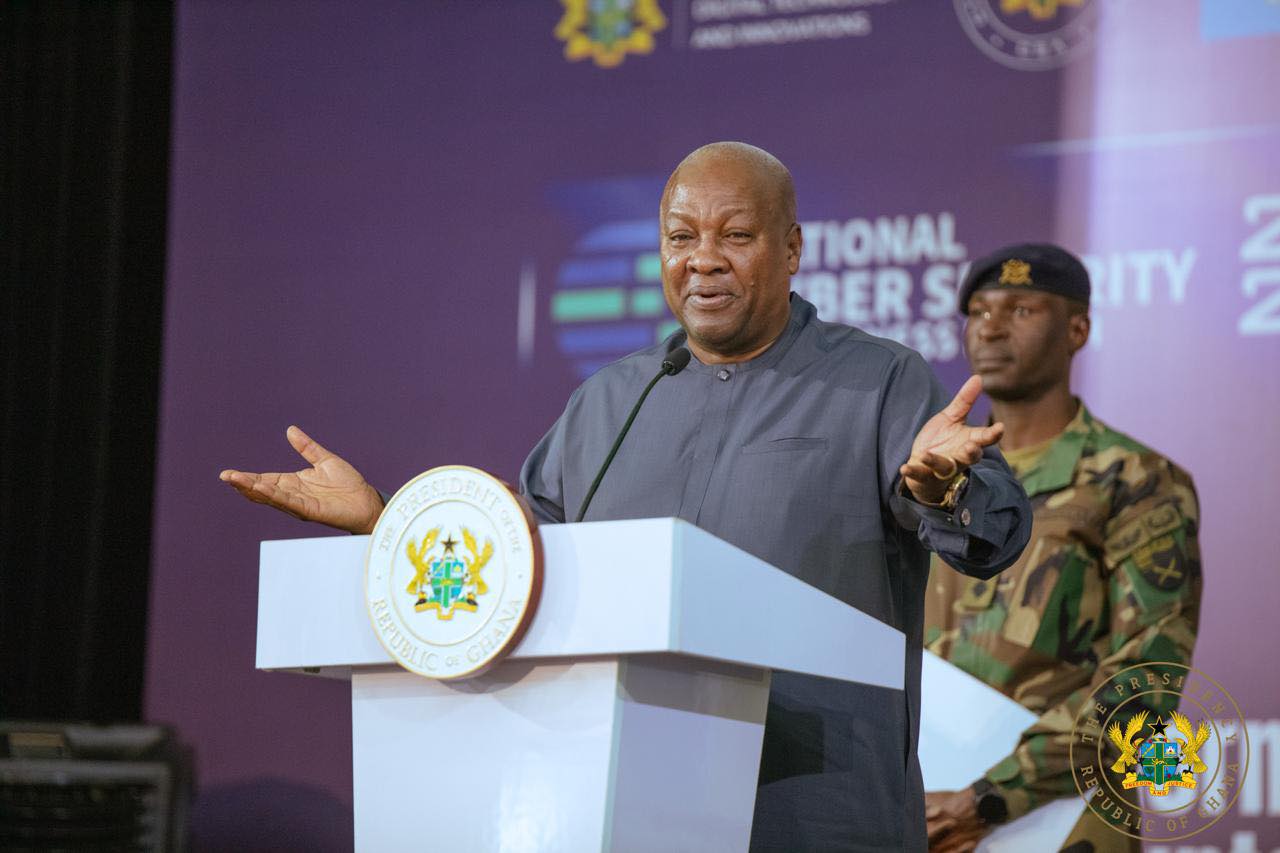
President John Dramani Mahama has described the recommendations put forward by the Constitutional Review Committee as bold and transformative, arguing that they are necessary steps to strengthen Ghana’s democratic system.
Addressing the gathering after receiving the committee’s final report in Accra on Monday, December 22, the President acknowledged that while some of the proposals may appear radical, they are essential for improving governance and rebuilding public trust in democratic institutions.
He observed that democratic decline in parts of the subregion makes it even more important for Ghana to modernise its constitutional framework.
“Many of the recommendations you have presented are truly revolutionary,” President Mahama said. “Some may seem radical, but they are clearly in the best interest of our democracy.”
He added that it is crucial for citizens to be reminded that democratic governance remains superior to any other system of rule.
According to the President, democracy creates space for freedom of expression and innovation, unlike military or authoritarian systems where decisions are imposed without public input.
President Mahama stated that his administration intends to pursue the implementation of the report through a bipartisan approach, engaging all relevant stakeholders to ensure broad consensus around the reforms.
He singled out proposals relating to the Council of State, noting that enhancing its role in presidential appointments would boost public confidence while preserving the President’s constitutional authority to finalise appointments.
The Constitutional Review Committee, chaired by Professor Henry Kwasi Prempeh, submitted a wide-ranging set of recommendations. These include extending the presidential term from four to five years, separating the Executive from Parliament, reconstituting the Council of State along the lines of the 1969 Constitution, and redefining the role of traditional authorities in local governance.
Additional proposals call for depoliticising state-owned enterprises, reforming public sector appointment processes, splitting the Commission on Human Rights and Administrative Justice into two separate institutions for human rights protection and anti-corruption enforcement, and reducing the length of election campaigns to allow governments more time to focus on governing effectively.
