
President John Dramani Mahama says his mission as Ghana’s leader goes beyond national transformation — it is to demonstrate to the world that Ghana, and indeed Africa, can thrive independently without reliance on foreign aid or paternalistic partnerships.
In an exclusive interview with TIME Magazine, the Ghanaian President reaffirmed his belief in Africa’s potential to rise through self-reliance, innovation, and responsible governance.
“It will get me into trouble again!” Mahama joked after the interview, recalling an earlier controversy over his op-ed in the UK Guardian, where he openly criticised former U.S. President Donald Trump’s remarks about South Africa and his alleged “unfounded attack” on President Cyril Ramaphosa.
When asked about the reaction from Washington, Mahama said U.S. officials had expressed surprise that he personally authored such bold commentaries. “They asked, ‘Did your President actually write this?’ My Foreign Minister said, ‘Yes, my President writes his own pieces.’ They said, ‘Well, he’s President now. Can you ask him to put his pen down?’”
But Mahama insists his pen—and his voice—are tools of leadership. “We cannot keep quiet when Africa is being misrepresented,” he said.
A Call for African Autonomy
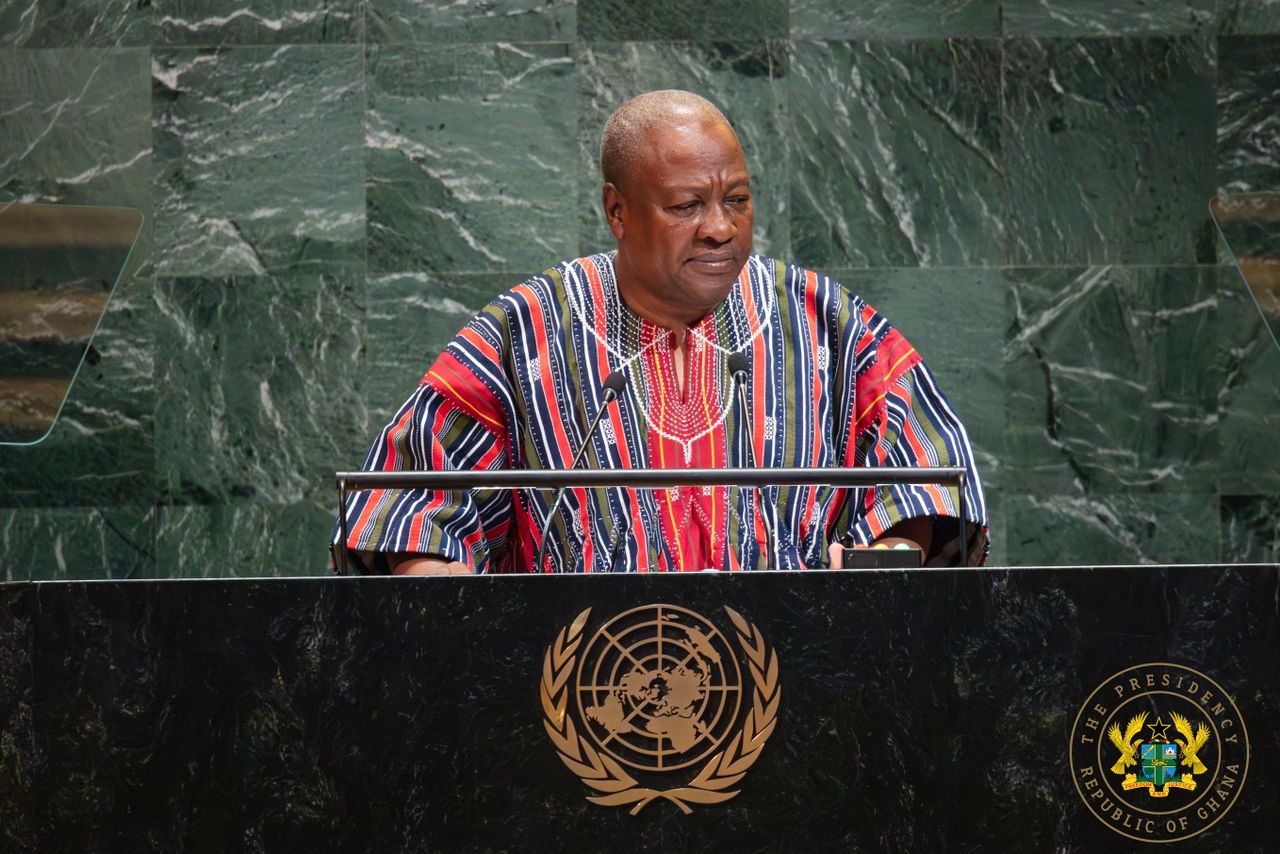
At the 2025 UN General Assembly, Mahama delivered one of the most assertive African speeches in recent years, accusing the UN Security Council of exercising “almost totalitarian guardianship over the rest of the world” and demanding an African permanent seat on the Council.
“The future is African!” he declared, earning standing applause from delegates.
Mahama’s vision is backed by data. By 2050, Africa is expected to house over 25% of the world’s population and generate a GDP of $29 trillion—up from $2.6 trillion in 2020. Yet, he acknowledges that this growth must be earned through hard work, structural reform, and an end to dependency on foreign aid.
Fixing Ghana’s Economy from Within
When Mahama was sworn in for a second, nonconsecutive term in January 2025, Ghana was in crisis—crippled by debt, inflation, and 38.8% youth unemployment. In just six months, his administration halved inflation, strengthened the cedi by 30%, and launched the Resetting Ghana agenda.
His reforms include a 24-hour economy, the abolition of nuisance taxes on betting and e-commerce, and the elimination of tertiary school fees for first-year students. Mahama also introduced free sanitary products for schoolgirls and unveiled an ambitious plan to train one million coders within four years to expand Ghana’s digital economy.
“We must create jobs, keep our cities safe, and ensure our youth see a future here, not abroad,” Mahama told TIME.
Adapting to the End of Foreign Aid
Mahama’s leadership has coincided with major shifts in global aid policy. The Trump administration’s decision to gut USAID programs across sub-Saharan Africa slashed billions from health, education, and governance budgets. Ghana alone lost $156 million in funding.
But Mahama saw it as an opportunity. “We simply made adjustments,” he said. “We’re fine, but not every country is. For some, USAID’s withdrawal shut down entire school feeding programs. That’s when we realised Africa must stand on its own.”
His philosophy echoes that of Zambia’s Hakainde Hichilema and Rwanda’s Paul Kagame, who also view the aid cuts as a “wake-up call.” Mahama believes the era of dependency is over: “It teaches us to be self-reliant.”
The New African Strategy: Trade, Technology, and Transformation
Mahama envisions an Africa that no longer exports raw materials but processes them locally for global markets. Ghana’s first gold refinery opened in 2024, and the President recently launched GoldBod, a regulator to combat smuggling and increase state revenues.
He is also steering Ghana toward digital innovation, agribusiness, and green technology, positioning the country to benefit from Africa’s massive carbon credit and blockchain potential.
In Mahama’s words: “Africa’s resources must first benefit Africans. We cannot remain the source of raw materials for others to process.”
Redefining Ghana’s Global Partnerships
Despite his criticisms of U.S. policy, Mahama maintains that Ghana will engage globally on its own terms. “The world is becoming more unilateral, but progress requires collaboration,” he said.
He points to the African Continental Free Trade Area (AfCFTA)—a $3 trillion market—as Africa’s greatest untapped opportunity. “We must trade more with ourselves. That’s how we grow our economies and our confidence.”
A New Era of African Confidence
Mahama’s outlook blends idealism with pragmatism. Born in Damongo to a prominent political family, educated in Ghana and Moscow, and having led both in failure and comeback, he speaks with conviction born of experience.
“I want to prove that Ghana and all of Africa can stand on their own,” he concludes. “We have everything it takes—resources, people, and the will. What we need now is belief.”
