

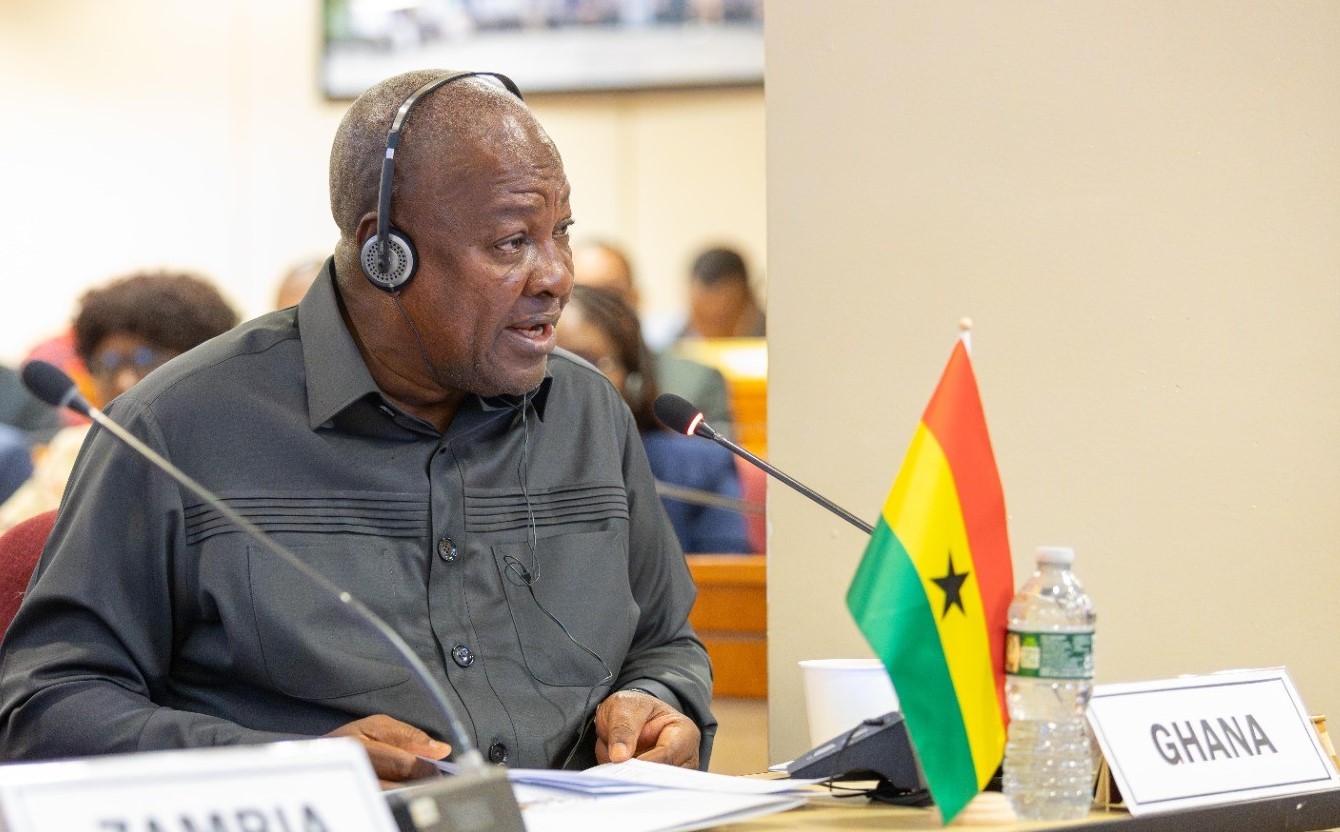
President John Mahama has urged African nations to make bold investments in skills development, industrial capacity and continental unity, cautioning that failure to act decisively could leave the continent trailing in an increasingly competitive global economy.
Speaking to global political and business leaders at the World Economic Forum in Davos on Thursday, January 22, President Mahama said the world is moving into a phase where countries must innovate, compete and build strong economies or risk being left behind.
He noted that Africa’s youthful population is becoming increasingly impatient with slow development, stressing that young people across the continent are observant, talented and eager for meaningful opportunities.
According to President Mahama, Africa’s future depends on five critical priorities that leaders must urgently pursue.
First, he emphasised the importance of investing in practical, job-ready skills rather than focusing solely on formal education. He highlighted areas such as digital technology, green energy and manufacturing, stressing the need to equip young Africans with the ability to create and produce, not just consume.
Secondly, he called for collective industrialisation efforts across the continent, arguing that individual countries lack the scale to industrialise on their own. He proposed stronger regional collaboration through shared manufacturing hubs, integrated energy systems and digital infrastructure to drive growth and employment.
President Mahama also stressed the need for African unity in global negotiations, particularly in areas such as trade, mineral resources and climate finance. He said Africa gains strength when it negotiates as a bloc rather than as individual states, adding that unity must be a practical strategy, not just political rhetoric.
In addition, he urged African countries to increase local production of essential goods to reduce reliance on external markets. He noted that dependence on foreign production for items such as vaccines, semiconductors and solar panels leaves the continent vulnerable.
Finally, President Mahama underscored the need for accountability and institutional reform, warning that corruption and inefficient systems discourage investment and undermine progress. He said meaningful reform must deliver tangible results if Africa is to gain global confidence and achieve sustainable development.
