

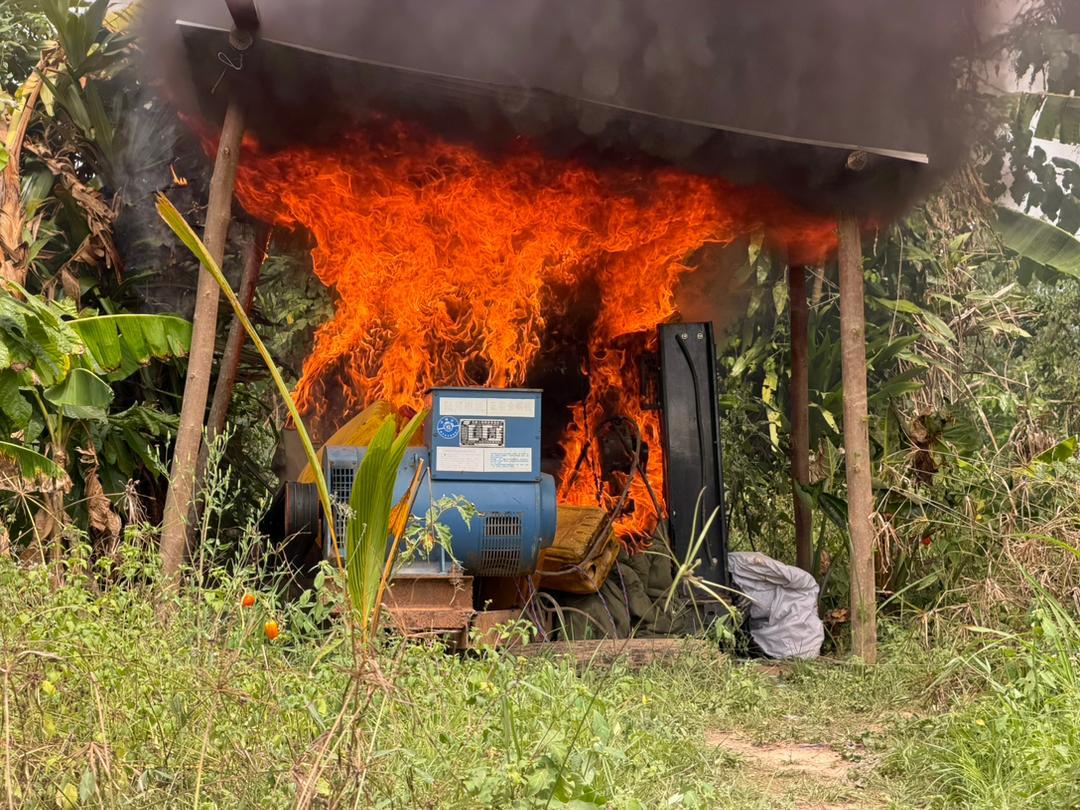
NAIMOS has intensified its fight against illegal mining at some parts of the Ahafo Region, carrying out what operatives describe as a complete sweep of illegal mining hideouts in the Tano North District. Once more, this operation exposes not just environmental destruction, but a familiar pattern of warning leaks, abandoned machinery, and communities left to bear the cost.
The operation followed weeks of intelligence and reports received by NAIMOS of sustained illegal mining activities at communities like Sukuumu, Subrisu No. 2, and Adrobaa. Deploying the task force was thus necessary to avert the looming pollution of the Tano River and rampant destruction of farmlands of the inhabitants, their only sources of livelihood. When the task force arrived, it found three major sites that had clearly been under active illegal mining exploitation. What stood out immediately was not only what was present, but what was conspicuously absent.
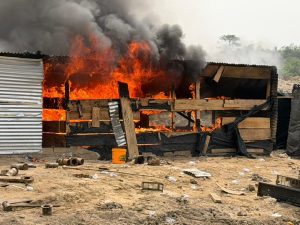
According to local residents, one of the sites had once been productive rice and maize farmland. That land, they said, was overtaken by illegal miners, reportedly including Chinese nationals, who had operated excavators and heavy machinery until very recently. By last Friday, however, the equipment was gone. The miners, tipped off ahead of time, had cleared out.
Surprisingly, there were no excavators on site during the team’s visit. The illegal miners too had absconded. But the scars were unmistakable. Makeshift structures, logistics points, and pumping infrastructure told the story of an operation that had been fully functional, until enforcement arrived. The absence of machinery did not slow NAIMOS down.
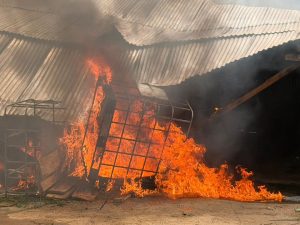
The task force moved methodically, dismantling what remained of the illegal mining infrastructure. Makeshift structures were set ablaze. Logistics facilities were destroyed. A heavy-duty multipurpose water pumping machine-critical to sustaining mining operations-was deliberately destroyed to ensure the site could not be reactivated quickly.
Items seized and destroyed during the operation included new white drums, excavator batteries, plastic chairs used at the site, empty barrels, and the water pumping machine itself. Individually, these items may seem mundane. Collectively, they represent the operational backbone of illegal mining, and removing them is how enforcement changes behavior.
The strategy here was clear: if the miners won’t be found, their ability to return will be taken away. NAIMOS will continue to deny the illegal miners usage of these instruments of pollution and destruction.
By rendering the environment hostile to illegal activity, NAIMOS aimed to break the cycle of temporary withdrawals followed by quiet returns. The destruction was not symbolic; it was tactical. Without logistics, without pumping capacity, and without shelter, illegal mining becomes costly, risky, and difficult to restart.
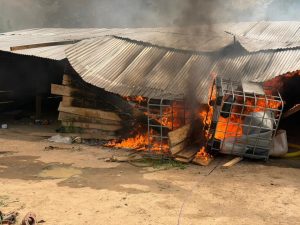
What unfolded at the communities in Tano North is not just a raid, it is a snapshot of a broader national challenge. Communities losing farmland. Rivers and Soils under and severe threatening livelihoods. Foreign-backed operations disappearing just ahead of enforcement. And a task force adapting its approach to ensure that even when miners flee, their operations do not survive.
For the people of Sukuumu, Subrisu No. 2, and Adrobaa, the operation represents a pause, a chance for damaged land to recover and for illegal activity to stay gone. Whether that pause becomes permanent will depend on sustained pressure, intelligence discipline, and continued presence on the ground.
But for now, in Tano North, the message was unmistakable: even when the miners run, the cleanup will follow, so galamsey will stop.
