

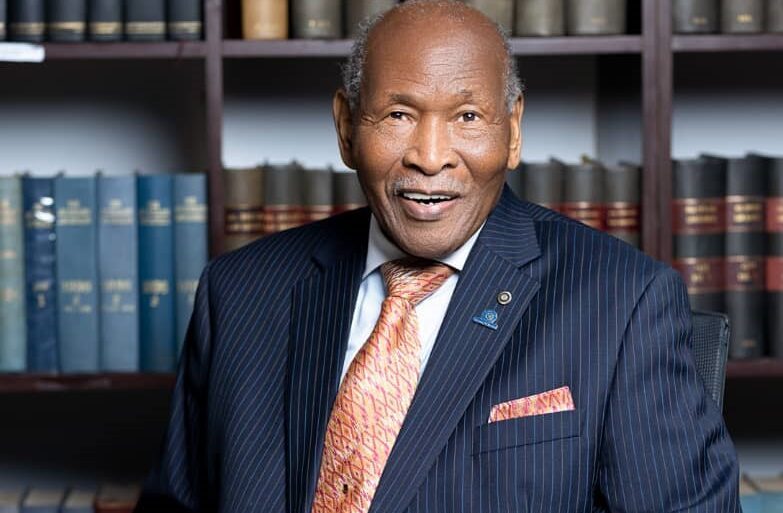
Former President of the Ghana Bar Association, Sam Okudzeto, has launched a strong critique of the Office of the Special Prosecutor (OSP), arguing that it has failed to achieve the purpose for which it was established.
Speaking on JoyNews’ PM Express on December 8, Mr. Okudzeto said corruption remains pervasive across Ghanaian institutions, with no visible evidence that the OSP has made any significant impact.
“The question is simply this: why was the institution set up? Has it achieved its purpose? I don’t think so,” he said. “Corruption is still on. I see it every day. Everywhere you turn in every institution, you see it openly. People are no longer afraid. They demand money from you even after you’ve paid.”
Questions Role of OSP
Mr. Okudzeto questioned the rationale behind setting up the OSP when the Attorney-General’s Department already has a prosecutorial mandate.
“You have an Attorney-General’s Department. It has a civil section headed by the Solicitor-General and a prosecutorial section headed by the Director of Public Prosecutions (DPP). What is the DPP supposed to do? Prosecute criminal offences, including corruption. Why then create another institution to do the same job?” he asked.
He argued that corruption should not be treated as a special category of crime requiring an entirely new institution.
“There is nothing that makes corruption different from any other crime,” he said.
Calls for Scrapping the OSP
On whether the Office should be abolished, Mr. Okudzeto aligned with calls for its dissolution, saying resources should instead be directed toward strengthening the Attorney-General’s Office.
He explained that special prosecutors in other jurisdictions are appointed only to address specific, time-bound issues—not to head standalone institutions.
“In other places, a special prosecutor is appointed to solve a particular problem. You don’t create an entire institution around an individual. That is dangerous,” he warned.
Concerns About Institutional Design
Mr. Okudzeto further stressed that building a major national institution around one individual, without a long-term institutional framework, is risky.
“When you don’t train people to do the job and you think creating institutions around individuals is the solution, it becomes very dangerous,” he said.
He insisted that Ghana’s anti-corruption efforts would yield better results with a stronger, better-resourced Attorney-General’s Department rather than maintaining a separate OSP.
