

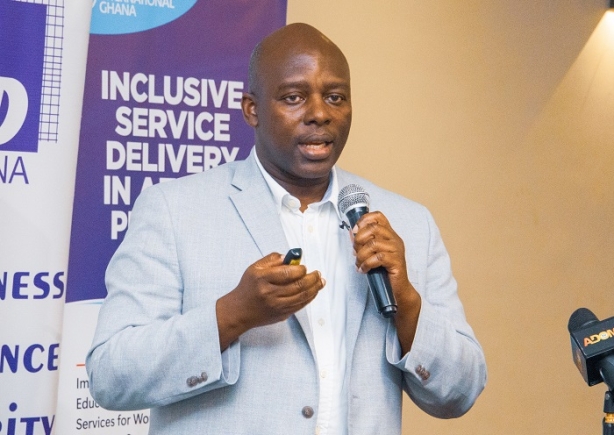
Governance expert and CDD-Ghana fellow, Professor John Osae-Kwapong, has raised serious questions about Ghana’s public sector accountability mechanisms in light of the National Food and Buffer Stock Company (NAFCO) scandal.
Speaking on JoyNews’ AM Show, Prof. Osae-Kwapong described the revelations from the Attorney-General’s report as deeply troubling and indicative of weak internal controls within state institutions.
“Anytime I listen to the Attorney-General or read the Auditor-General’s report, I ask myself — how come that throughout the entire process, none of the internal auditors or oversight units caught these issues? It’s shocking,” he said.
His comments follow disclosures by Attorney-General and Minister for Justice, Dr. Dominic Ayine, that the former Chief Executive Officer of NAFCO, Abdul-Wahab Hannan, allegedly used proceeds from financial crimes to acquire several luxury properties in Accra and Tamale worth millions of cedis and dollars.
Dr. Ayine described the findings as “a troubling example of the rot that has plagued the public sector.”
Prof. Osae-Kwapong expressed dismay that despite the existence of multiple oversight layers — including internal auditors, compliance officers, and financial controllers — such irregularities went undetected for years.
“Across all our public sector agencies, we have internal auditors and other layers of oversight. So, how did none of these mechanisms detect these acts that have deliberately cost the nation so much?” he lamented.
He warned that the repeated exposure of large-scale corruption scandals risks eroding citizens’ confidence in governance and accountability systems.
“Honestly, I don’t even think I’ll watch the next Attorney-General’s press briefing because some of these revelations start making you cynical,” he remarked.
The Buffer Stock scandal has dominated national discourse in recent weeks, with the Attorney-General’s findings prompting calls for stronger oversight, forensic audits, and reforms to restore public trust in state-owned enterprises.
