

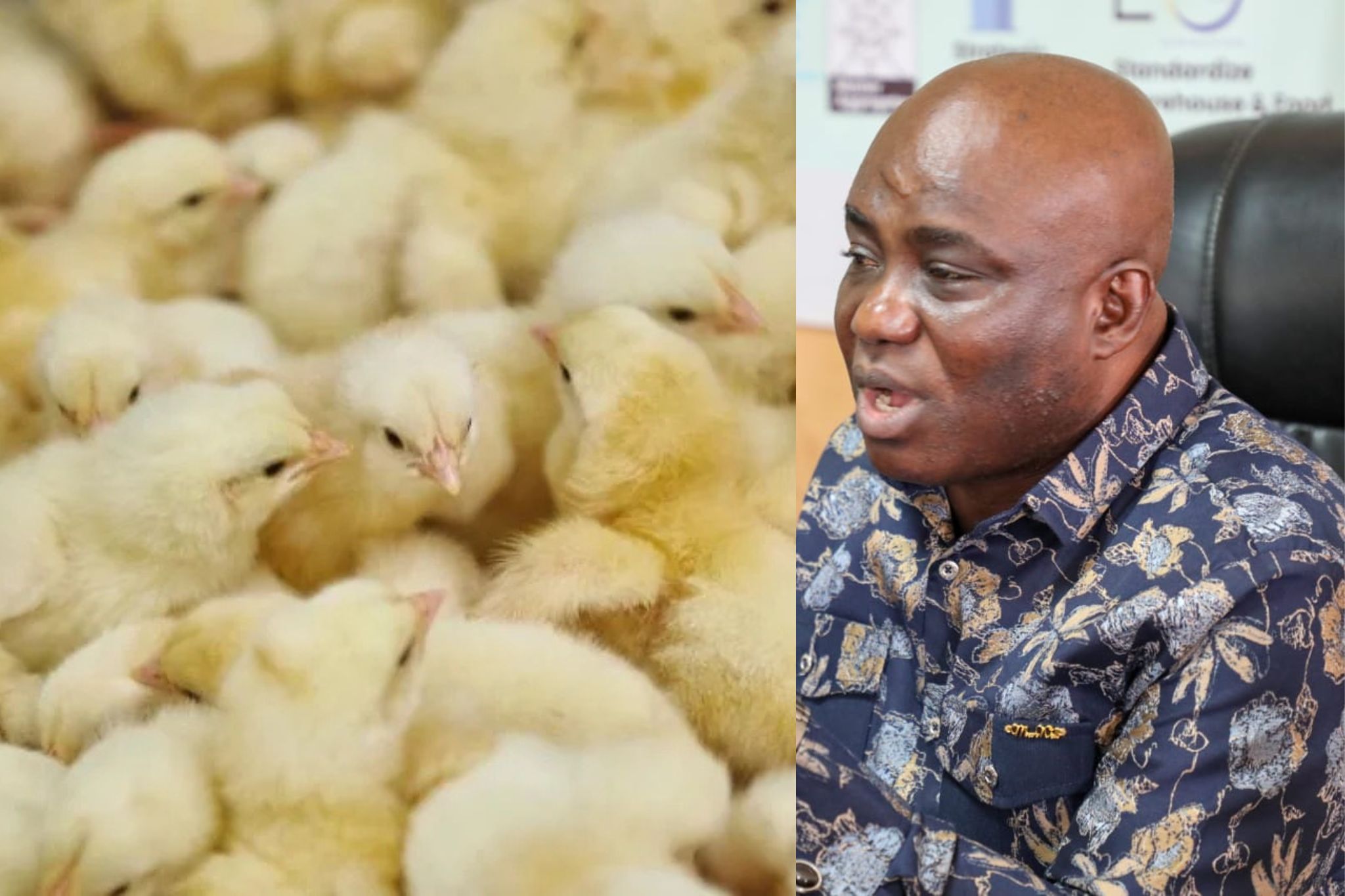
The government will in October 2025 officially launch the Nkoko Nkitinkiti poultry programme, a flagship initiative aimed at reducing Ghana’s heavy dependence on imported chicken and strengthening domestic food security.
Minister for Food and Agriculture Eric Opoku disclosed the plans during an interview on Hot Issues with Keminni Amanor on Sunday, September 28, explaining that the initiative is currently under pilot but will scale up nationwide next month.
“The birds we used for the pilot are doing well,” the minister said, adding that the programme is designed to cut poultry imports, stimulate local production, and create jobs across the value chain.
Programme Details
Under the rollout, government will procure 3 million birds, with each constituency set to receive 10,000 birds free of charge.
- Commercial-scale farmers will receive 80,000 birds each on a cost-recovery basis.
- Medium-scale farmers will receive between 1,000 and 3,000 birds each, also with repayment terms.
- Birds allocated to constituencies will be distributed at no cost to beneficiaries.
The initiative is expected to cost the government approximately GHS200 million.
Reducing Import Dependence
Currently, Ghana imports more than 80% of its poultry needs, a situation Mr. Opoku described as unsustainable.
“Ghana consumes a lot of poultry compared to a country like Nigeria. With this initiative, we can change the narrative and stop excessive importation,” he said.
The minister noted that curbing poultry imports could also limit the influx of other foreign products, such as tripe (“cow stomach”), once local production meets demand.
Food Security and Complementary Efforts
Despite challenges such as illegal mining’s impact on arable land, Mr. Opoku maintained that Ghana remains food secure by all standards. He added that the poultry programme forms part of a broader agricultural strategy that includes:
- Expanded support for rice and tomato production
- Collaboration with processing plants to absorb gluts and stabilise prices
“This initiative, combined with our support for other key crops, will safeguard Ghana’s long-term food sovereignty,” he assured.
