

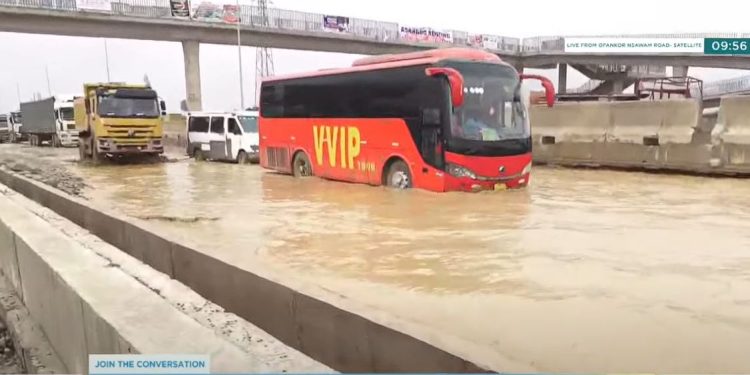
Heavy rains that pounded the Nsawam-Pokuase corridor between the night of Tuesday, August 5, and the early hours of Wednesday, August 6, left major sections of the busy road flooded and impassable, triggering chaos for thousands of commuters.
The deluge caused severe traffic gridlock as vehicles became submerged, some stalling or overheating in rising waters that swamped large portions of the highway. Early morning travelers were stranded for hours, wading through stagnant, murky floodwaters as traffic officers and good Samaritans tried to manage the gridlock.
“We’ve been stuck here for hours. Some cars just died in the water. It’s not safe, and we go through this every time it rains,” lamented one frustrated driver in an interview with Channel One News.
The affected road is a vital transport link between Accra and the Eastern Region, and users have long complained about the lack of effective drainage infrastructure, which makes it vulnerable to flooding during heavy rainfall.
Eyewitnesses described the scenes as both chaotic and dangerous, with some vehicles partially sunk and others billowing smoke as engines failed.
Residents and motorists are now calling on President John Dramani Mahama and relevant authorities to treat the situation with urgency. Many say the flooding has become a recurring nightmare with serious implications for safety, productivity, and regional commerce.
“If nothing is done soon, someone is going to die on this road—not from an accident, but from neglect,” a visibly angry resident said.
The Nsawam-Pokuase flooding has once again raised broader concerns about urban planning, road engineering, and disaster preparedness as Ghana grapples with the annual toll of the rainy season.
Calls are growing louder for the government to rehabilitate the road and improve drainage systems to prevent future disasters and preserve one of the country’s most important transport arteries.
