

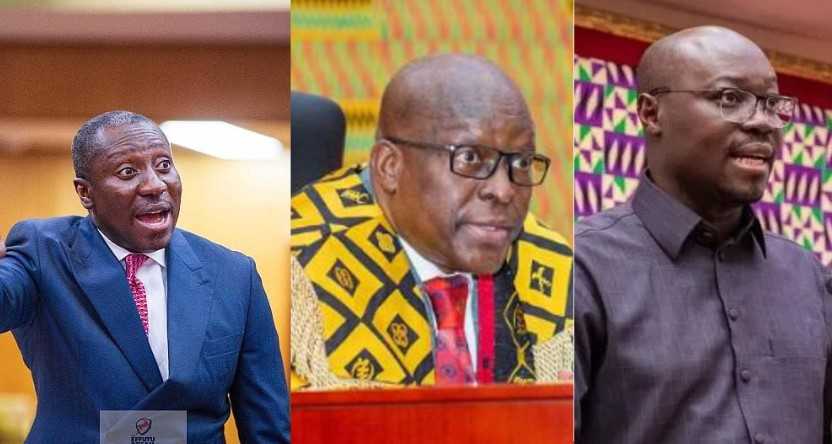
The Supreme Court’s recent ruling on the declaration of four parliamentary seats as vacant by Speaker Alban Bagbin seemed poised to settle the longstanding debate over which party holds the Majority in Parliament. However, new developments suggest otherwise.
On November 12, 2024, the Apex Court deemed Speaker Bagbin’s ruling unconstitutional, effectively affirming the NPP MPs’ Majority status. This decision implied a return to the prior arrangement in the House before the seats were declared vacant.
In light of this, on November 22, Alexander Afenyo-Markin, MP for Effutu, petitioned Speaker Bagbin to recall Parliament to address pressing government business. These included requests for tax exemptions under the One District, One Factory program, the approval of a $250 million International Development Association facility, the Ghana Financial Stability Fund, nominations for Supreme Court justices, and the ratification of mining lease agreements for bauxite and lithium projects.
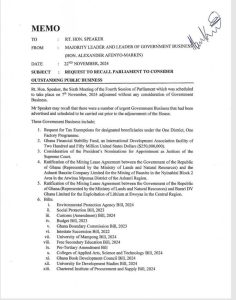
In a surprising twist, Dr. Cassiel Ato Forson, MP for Ajumako Enyan Essiam, also addressed the Speaker on November 25 regarding Afenyo-Markin’s recall request. Notably, both MPs signed their respective memos using the title “Majority Leader.”
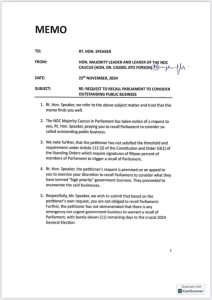
Dr. Ato Forson urged the Speaker to reject the recall, calling it ill-timed and unnecessary. He emphasized that the timing—just days before national elections—could disrupt ongoing preparations and burden taxpayers.
“In less than two weeks, Ghanaians will elect a President and members of Parliament. The remaining days should allow candidates and the electorate to engage meaningfully for informed decision-making,” Forson stated.
He further argued that convening Parliament at this stage would escalate the unresolved stalemate and potentially destabilize the country’s peace. Forson proposed a leadership meeting after the elections to address the stalemate and agree on a suitable date for parliamentary recall.
This dual claim to the Majority Leader title highlights the persistent tension within Parliament, even after the court ruling.
